
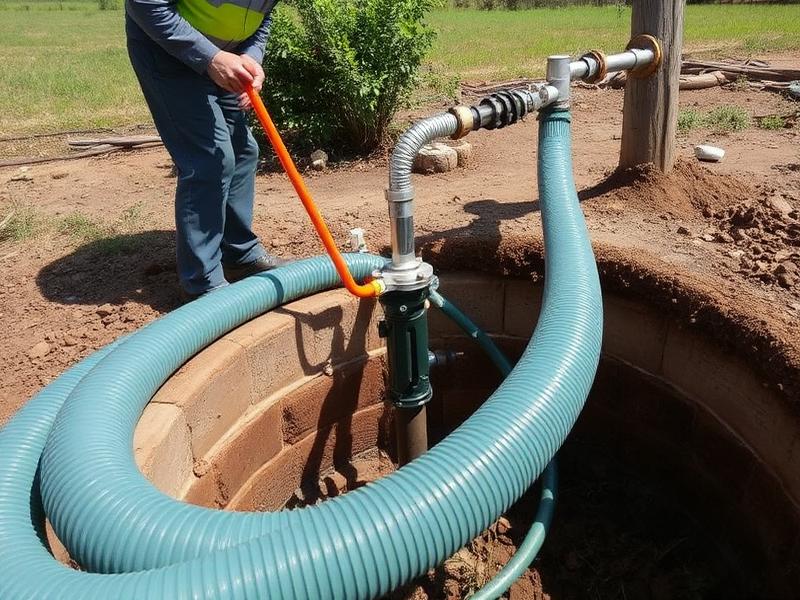
“When a pump is past repair, we replace it with the right unit for your well and your household demand — no gimmicks, no shortcuts, just dependable water.”
A pump that's undersized runs dry; one that's oversized burns out early and wastes power. We size the replacement to your well's depth, static water level, recovery rate and how much water your household actually uses.
Every replacement includes new wire, torque arrestor, safety rope and fresh splices — the small parts that decide whether the next pump lasts five years or twenty.
How the job goes
- 1
Well assessment
We confirm the well's depth, casing diameter, static water level and recovery rate, then look at your household's demand — bathrooms, irrigation, livestock — before any equipment is chosen.
- 2
Sizing and options
You get a pump sized in horsepower and gallons-per-minute to match the well, with the options explained in plain language so you can pick with confidence.
- 3
Pull and install
The old pump comes out with its pipe and wire. The new pump goes in with fresh splices, torque arrestor, safety rope and new wire or drop pipe wherever the old material is questionable.
- 4
Start-up and disinfection
We set the pressures, verify cycle times, flush the system and chlorinate the well so the water is clean when we leave.
Signs you need this service
- Pump is more than 12–15 years old and failing
- Repeated repairs on the same unit
- Motor is shorted to ground or seized
- Household demand has outgrown the original pump
- You've added bathrooms, irrigation or livestock
What's included
- Well depth, static level and recovery rate assessment
- Correct horsepower and GPM sizing
- Pump pulling and installation
- New drop pipe, wire, splices and safety rope as needed
- System start-up, pressure setting and disinfection
What affects the cost
No two wells are identical, so we quote after diagnosis — never before. These are the factors that move the price:
- Well depth — deeper wells need more wire, pipe and labor to pull and set
- Pump horsepower and construction (stainless vs. thermoplastic)
- Whether existing wire, drop pipe or the pitless adapter need replacing
- Casing diameter and wellhead access
- Adding upgrades like a new pressure tank or constant pressure controls in the same visit