
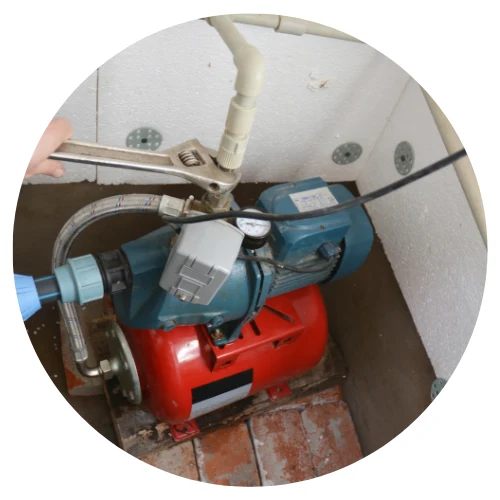
“If your well pump isn’t working right, we’ll get it fixed fast. We know how important running water is, and we’ll make sure your pump is back in top shape so you’re never left without water.”
When the water stops, the first question is whether the pump actually failed. Plenty of no-water calls come down to a pressure switch, a control box capacitor, a tripped breaker or a waterlogged tank — repairs that cost a fraction of a pump replacement.
We diagnose before we quote. You get an amp draw reading, a pressure test and a clear explanation of what failed and why, so you're not paying for a new pump you didn't need.
How the job goes
- 1
Phone triage
Tell us what the system is doing — no water, low pressure, a breaker that keeps tripping. We can often narrow it down over the phone, and no-water calls go to the front of the day's schedule.
- 2
Diagnosis before repair
On site we meter voltage at the control box, read amp draw at the pump, test the pressure switch contacts and check the tank's air charge. That tells us exactly which part failed instead of guessing.
- 3
Repair from truck stock
Switches, control boxes, capacitors, wire and common fittings ride on the truck, so most repairs finish in one visit. If the pump itself has failed, we'll tell you straight and quote the replacement.
- 4
Full system verification
Before we leave we run the system through several cycles, confirm cut-in and cut-out pressures, and check the water at a tap. You see the numbers, not just a bill.
Signs you need this service
- No water at any fixture in the house
- Pressure drops off after a minute or two of use
- The pump runs constantly or clicks on and off rapidly
- Sputtering, air-filled faucets
- Breaker trips whenever the pump kicks on
What's included
- Full electrical and pressure diagnostic
- Pressure switch, control box and capacitor testing
- Amp draw and insulation resistance readings
- Wiring, splice and drop pipe inspection
- Written findings with repair-vs-replace recommendation
What affects the cost
No two wells are identical, so we quote after diagnosis — never before. These are the factors that move the price:
- Whether the fault is electrical (switch, capacitor, wiring) or the pump itself
- Well depth and how much pipe and wire must be pulled to reach the pump
- Condition of the drop pipe, splices and well seal once we open it up
- Accessibility of the wellhead — buried or tight wellheads take more time
- Whether a failing pressure tank contributed and needs attention too